
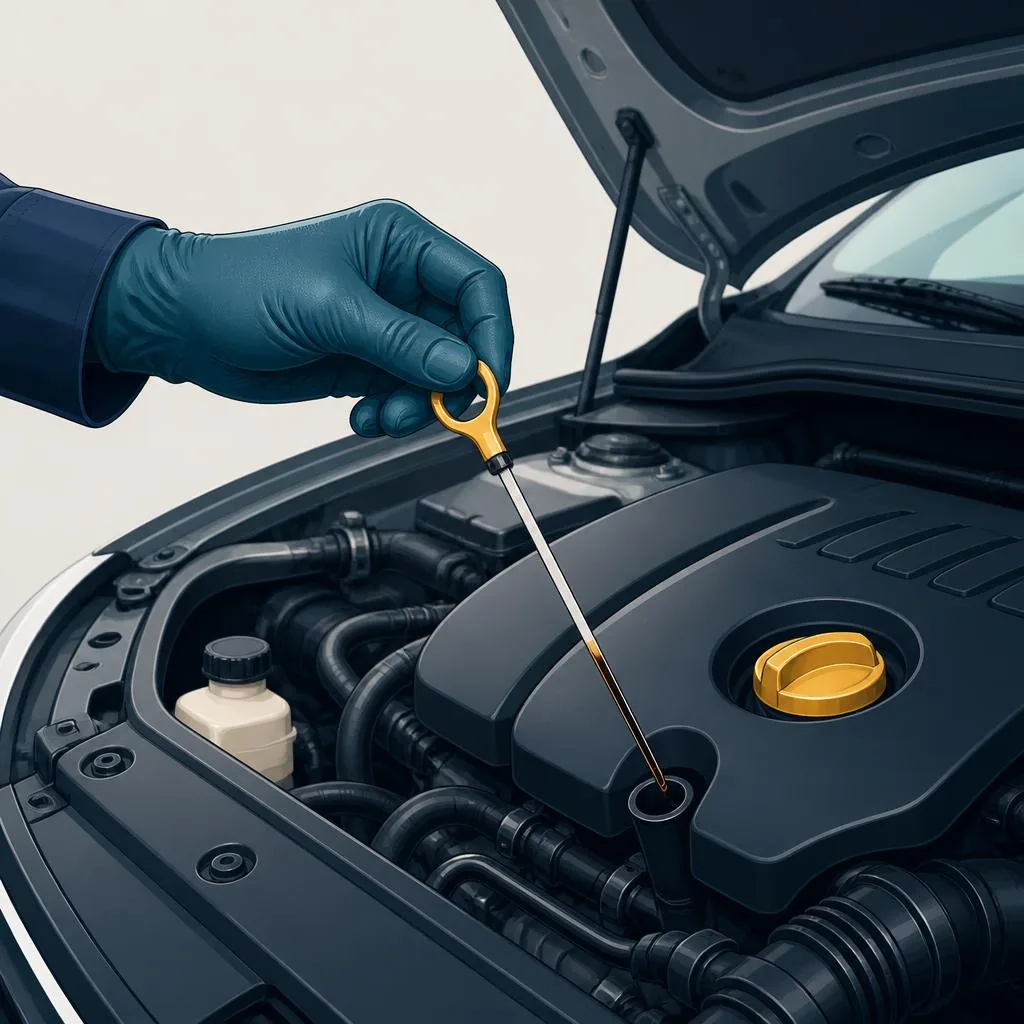
Use the method in your handbook
Park on level ground and follow the vehicle maker’s instructions for when to check the level. Some dipsticks are checked with the engine off after a short wait; electronic systems may have a specific menu or temperature requirement.
If the car has a dipstick, remove it, wipe it clean, insert it fully and read it again. The level should sit within the marked range. Do not assume every dipstick is read the same way, and avoid touching hot engine parts.
Top up carefully
Use an oil that meets the specification in the owner’s handbook, not just one with a familiar brand or viscosity number. Add a small amount at a time, wait as instructed and recheck. Overfilling can also cause problems.
If you cannot confirm the correct oil, the level keeps dropping, or you see a leak, arrange advice rather than repeatedly topping up without finding the cause.
A level check is not an oil-change schedule
A normal reading does not prove the oil is still within its service interval. Change timing depends on the manufacturer’s schedule and the vehicle’s use. Follow the handbook or service reminder, and keep a record of the last change if known.
Stop if an oil-pressure warning appears
A red oil-pressure warning while the engine is running is different from a routine service reminder. Stop somewhere safe, switch the engine off and consult the handbook or get assistance. Continuing to drive with low oil pressure can cause serious engine damage.