
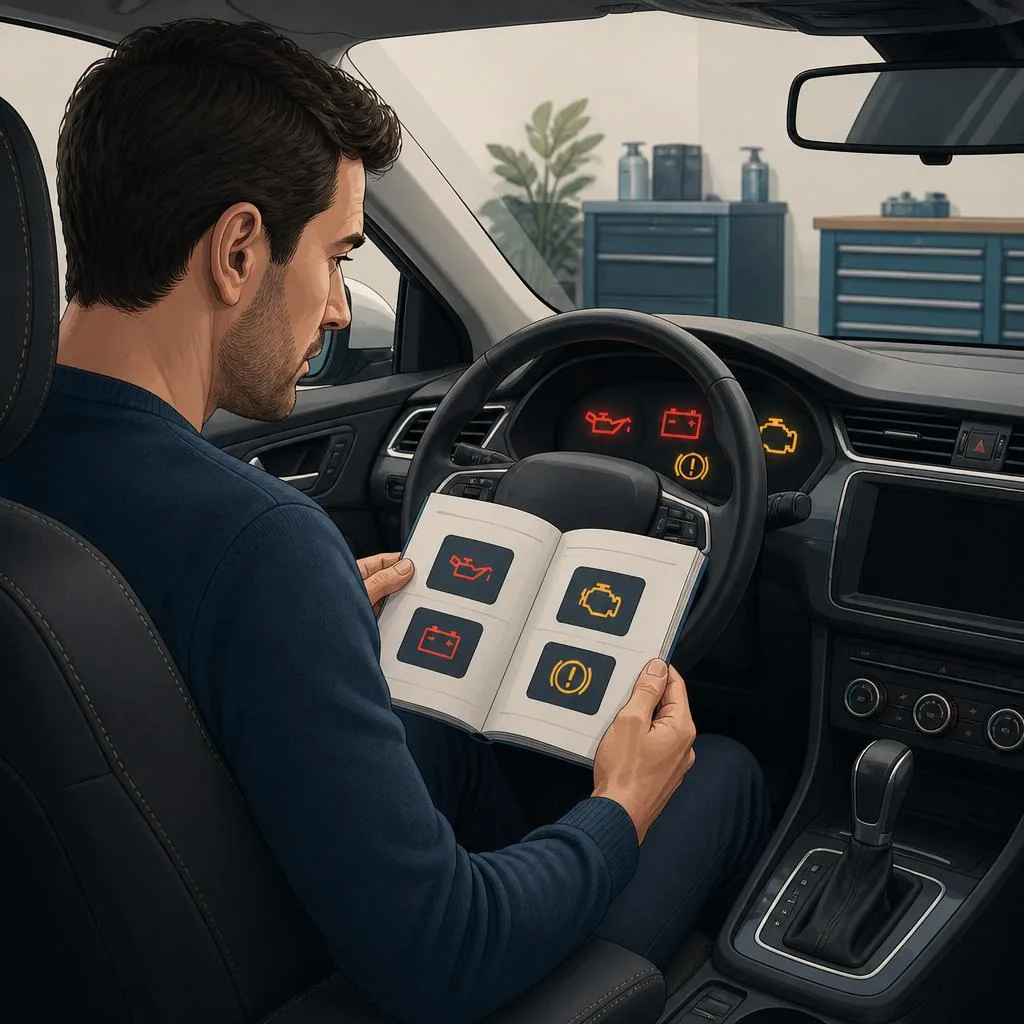
What the colours generally mean
Red warnings commonly call for immediate attention; amber warnings often mean the vehicle needs checking soon. These are broad rules, not a substitute for the instructions for your make and model.
Some lights appear briefly when the ignition is switched on. If a warning remains on, flashes or appears while driving, look up that exact symbol in the owner’s manual and follow its instructions.
If a warning appears while driving
- Keep control of the vehicle and assess whether it is safe to continue.
- Use the handbook to identify the symbol and required action.
- For a serious warning, stop somewhere safe and switch off if instructed.
- Do not ignore a warning because the car still feels normal.
Why a warning light is not a diagnosis
A dashboard light may identify a system or condition, not the exact component that caused it. Diagnostic codes also need to be interpreted alongside symptoms and suitable tests.
Avoid replacing parts based only on an internet description of a symbol. A garage can discuss the warning and quote for the checks needed to find the cause.
When to ask for help
If the warning is red, flashing or accompanied by smoke, unusual noise, loss of power or unsafe handling, stop when safe and seek advice. For an amber warning with no obvious change, follow the manual and arrange an inspection as soon as its guidance recommends.