
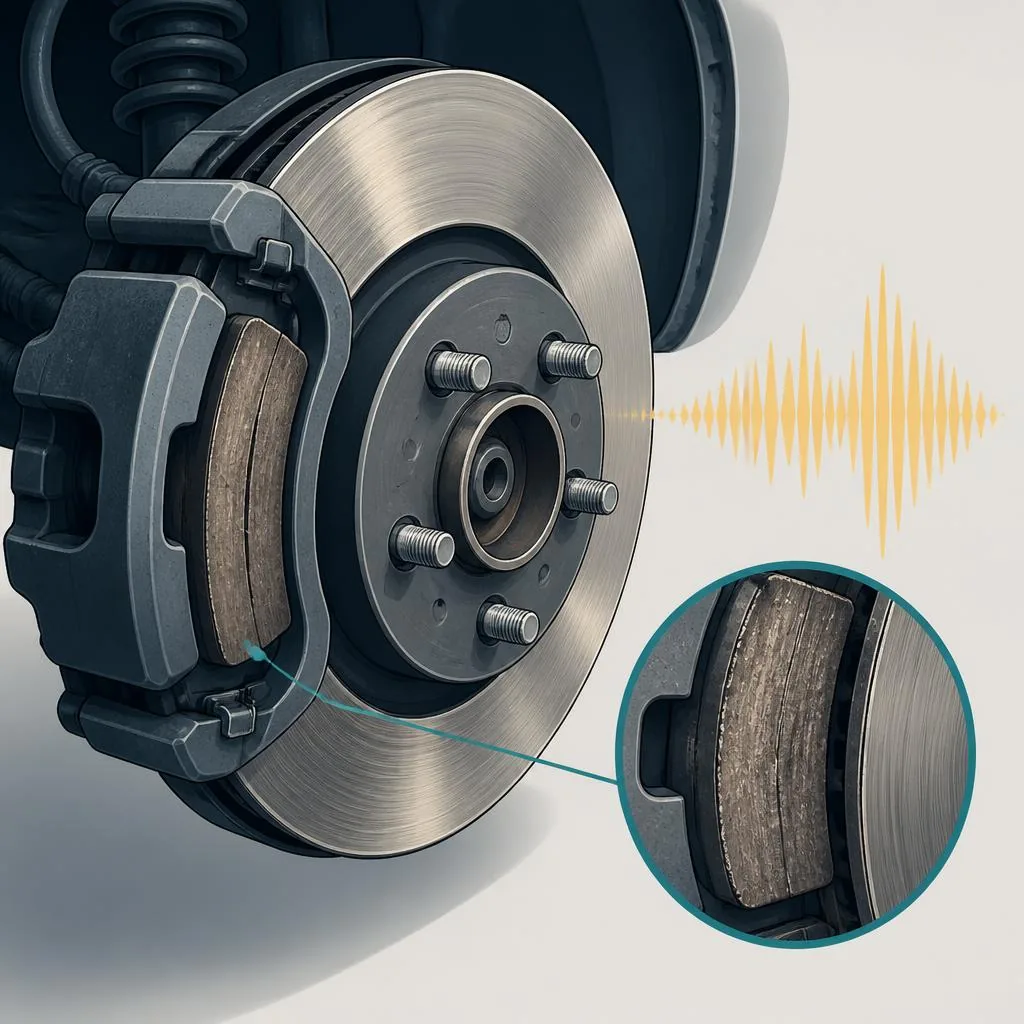
Describe the sound and conditions
Note whether the noise happens when braking, turning, reversing or driving over bumps. Mention whether it is occasional or constant and whether it began after recent work. These details help a technician reproduce the symptom.
A light squeak can sometimes have a less serious cause, but persistent noise, grinding, vibration or a change in stopping performance should not be dismissed. A visual guess from outside the car is not a reliable diagnosis.
Signs that need prompt attention
- Grinding or metal-on-metal sounds while braking.
- A longer stopping distance or reduced braking response.
- A soft pedal, strong vibration or the car pulling to one side.
- A brake warning light or fluid leak.
When not to continue driving
If braking is reduced, the pedal feels abnormal, a warning indicates a serious fault or the vehicle is difficult to control, stop at a safe place and arrange assistance. Do not attempt a high-speed test to reproduce the sound.
If braking still feels normal but a new noise persists, arrange an inspection promptly and ask the garage whether it is safe to drive there. The answer depends on the symptom and vehicle condition.
Why replacing parts by guesswork can fail
Pads, discs, calipers and other nearby parts can create similar symptoms. An inspection helps confirm the cause and whether the repair is limited to one component or needs related work.